fall, when Michael is fifteen
The Illness Begins
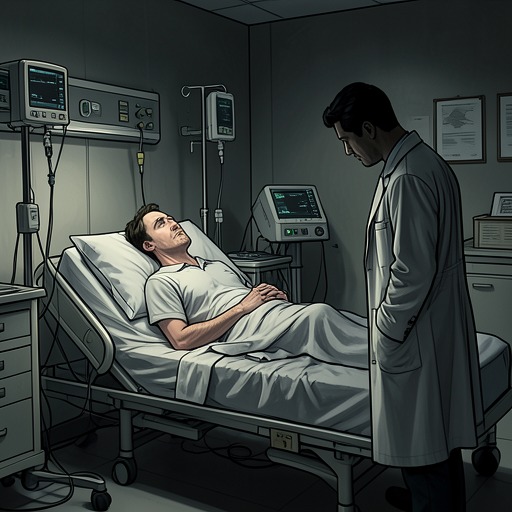
[Michael Berg](entity:character-recall-character-michael-berg-6fc8d3e96866) contracts hepatitis, grows steadily weaker, and becomes ashamed of his inability to manage ordinary tasks. One October day, on his way home from school, he vomits in the street and retches against a building wall.
His sickness isolates him from ordinary life and leads to the encounter that will shape his adolescence. His mother calls a doctor, who diagnoses hepatitis.
the day Michael falls ill in October
Help in the Courtyard
A woman from a nearby building pulls Michael through the entryway, washes his hand and face, and has him help rinse his vomit into the gutter. Seeing him cry, she embraces him, then walks him home with his schoolbag and supports his pace.
Michael later learns that she is [Hanna Schmitz](entity:character-recall-character-hanna-schmitz-5994016fb8ff). His mother assumes he will visit her once he recovers and bring flowers to thank her, turning an act of practical kindness into the beginning of their connection.
years later, recalling the illness and its aftermath
The Dream House
Michael remembers the imposing old building on Bahnhofstrasse where Hanna lived, with its stone façade, arches, balconies, and lion-carved entrance. The building dominates his childhood imagination, though its interior proves shabby and plain.
In recurring dreams, he finds the same house in unfamiliar cities or isolated countryside, turns back toward it, and reaches for the door handle without opening the door. The image becomes an emblem of a past he can approach but never fully enter.
late February, after Michael begins recovering
The Thank-You Visit
Carrying flowers, Michael goes to the building where he met the woman. A stranger directs him to [Hanna Schmitz](entity:character-recall-character-hanna-schmitz-5994016fb8ff)’s third-floor apartment. He finds the stairwell worn but clean, with the smell of cleaning fluid and food from neighboring homes.
Hanna is ironing in the kitchen. Michael remembers her movements, her bare arms, and the beauty of her face, though he later admits that he cannot recover that first impression precisely. The visit brings him into her private world, which seems more ordinary and vulnerable than the grand façade had led him to expect.
the first evening after Michael returns to Hanna
A Family Dinner
Michael arrives home late and lies about having wandered from the cemetery toward Nussloch. His brother mocks the implausible geography, while his older sister watches him closely. At dinner, Michael suddenly feels a deep tenderness toward his family and a sense that he is already leaving them behind.
His father agrees that he may return to school, with the proviso that he come home if it proves too much. Michael is pleased, yet experiences the decision as a farewell to home and a step toward Hanna.
the first days after Michael returns to school
The Daily Ritual
Michael cuts his last class to meet Hanna. Their encounters settle into a pattern of showering, making love, and lying together, with Hanna guiding him toward greater confidence and taking pleasure in their physical intimacy.
After several days, he asks her name and introduces himself as [Michael Berg](entity:character-recall-character-michael-berg-6fc8d3e96866). Hanna calls him “kid” and says her son is seventeen, giving Michael an age he does not actually have. Their first substantial conversation reveals how little each has learned about the other.
about a week into their affair
Hanna Defends Her Work
Michael admits that he has been skipping school and expects to repeat a grade. Hanna reacts angrily when he calls his schoolwork idiotic, acting out her work as a streetcar conductor and insisting that he respect the labor that supports her life.
She tells him he may return only if he does his schoolwork. When he protests that he cannot stop seeing her, she changes her shift and offers him a time to visit after school, provided he studies first. Her anger unsettles him, but it also forces him to confront the gap between his privileged assumptions and her working life.
the day after their conversation about school
The Reading Bargain
Hanna asks Michael to read aloud from his school texts, drawn to the sound of Greek and Latin and then to the German plays he is studying. She refuses intimacy until he has read for half an hour.
[Reading aloud](entity:concept-recall-concept-reading-aloud-ddae0534da06) becomes part of their repeated ritual: literature first, then bathing and sex, then rest together. Hanna listens closely and reacts forcefully to the characters, while Michael discovers that reading can intensify their closeness as much as physical desire does.
the first day of Easter vacation
The Streetcar Rejection
Michael rises before dawn to surprise Hanna on her streetcar route to Schwetzingen. He boards the second car, expecting her to come to him, but she remains beside the driver, talking and joking. Feeling exiled from the world she shares with the conductor, Michael gets off alone in open country as the sun rises.
He walks home in tears and confronts Hanna at noon. She says he chose not to know her by boarding the wrong car; he insists he came only to see her. Their quarrel leaves him uncertain and quick to accept blame.
later on the first day of Easter vacation
The First Reconciliation
Hanna tells Michael to leave, then undresses and runs a bath while he struggles to go. He departs but returns half an hour later, apologizes, and takes responsibility for the conflict, even where he believes he was misunderstood.
Hanna forgives him and draws him into the bath. Afterward, she teases him about wanting to make love on the streetcar, and the original cause of the quarrel seems to disappear. Its consequence remains: Michael learns that threats of rejection make him surrender and plead for her affection.
the week after Easter
The Bicycle Trip Plan
Michael and Hanna set out on a four-day bicycle trip, traveling through Wimpfen, Amorbach, and Miltenberg. Michael sells his stamp collection to finance the journey and is surprised by Hanna’s excitement as she packs and repacks her belongings.
She lets him choose routes, inns, food, and how they register at hotels, enjoying the chance not to make decisions. The trip enlarges the private rituals of their relationship while exposing the unequal balance of their ages and experience.
the beginning of the next school year
A New School Class
Michael’s old class is dissolved and its students reassigned among larger classes. He finds himself beside [Sophie](entity:character-recall-character-sophie-32e718e90b39), whose smile gives him a sense of a promising new beginning among the girls and boys in his year.
His confidence comes partly from believing that he knows how to act around women because of his relationship with Hanna. During a Greek lesson on the Odyssey, the teacher teases him about looking at Sophie, and Michael wonders whether to imagine the heroine Nausicaa as Sophie or Hanna.
summer after Michael’s return to school
The Summer Glide
Michael continues reading [War and Peace](entity:object-recall-object-war-and-peace-a0a79f1737d6) to Hanna, and they travel through the novel together. Hanna is absorbed but more reserved than she was with earlier works, as if she has entered a world that remains partly foreign to her.
They invent pet names, and when Michael calls Hanna a horse, she first recoils, then asks him to explain and accepts the name. Their closeness continues, but Michael’s school life and social world increasingly draw him elsewhere.
during the summer relationship
The Theater Outing
Michael takes Hanna to a theater in another town to see [Intrigue and Love](entity:object-recall-object-intrigue-and-love-502718b51bb8). It is her first time at the theater, and she enjoys the performance and the champagne at intermission.
Michael puts his arm around her and feels proud that he does not care what other people think of them. He nevertheless recognizes that he would care if they were seen together in his hometown, revealing the limits of his confidence and the secrecy surrounding their relationship.
Michael’s birthday in July
The Pool Birthday
Michael’s classmates celebrate his birthday at the swimming pool, but Hanna does not know when it is. He struggles to leave the party and finds her exhausted and bad-tempered when he arrives.
Resentment rises in him as he imagines the life he might be missing with his friends. Yet when Hanna turns cold and threatens the relationship, he returns to pleading and apology, caught between his growing independence and his fear of losing her.
as summer progresses
The Unacknowledged Affair
Michael develops friendships at the pool, especially with Holger and [Sophie](entity:character-recall-character-sophie-32e718e90b39), but does not tell them about Hanna. At first he claims he is waiting for the right moment; eventually the delay itself becomes the reason he stays silent.
During a thunderstorm, Sophie asks whether his past illness or some other trouble explains his distance. Michael nearly tells her about Hanna but postpones the confession. He understands that his concealment is not merely discretion: it is a denial of Hanna and a betrayal of their relationship.
the final days before summer vacation
Hanna at the Pool
After a strained period in which Hanna is visibly troubled, she bathes and makes love to Michael with an intensity that feels almost like a shared drowning. She then sends him to his friends, and he goes to the swimming pool feeling detached from ordinary life.
There, he sees Hanna standing at a distance in shorts and a tied blouse, watching him. He hesitates, questioning whether she wants to be seen with him and whether he wants the same. When he looks away briefly, she has disappeared; the unresolved image becomes another lasting memory.
the next day, at the end of summer
Hanna Leaves Heidelberg
Michael returns to Hanna’s apartment, but she is gone. The rooms look unchanged, and the hall clock still ticks. He calls the streetcar company, learns she has quit without notice, and discovers that she has registered a move to Hamburg without leaving an address.
Michael is devastated, and believes she has left because he failed to acknowledge her at the pool. He blames himself for his earlier evasions and sees her departure as punishment, though he cannot know what truly caused it.
the six months after Hanna disappears
The Years of Detachment
Michael’s bodily longing and guilt gradually fade. His family moves to another part of town, and Hanna’s memory ceases to accompany him everywhere, though he never wholly overcomes the experience.
He adopts a posture of superiority and emotional distance. When [Sophie](entity:character-recall-character-sophie-32e718e90b39) later returns after three years in a sanatorium, Michael sleeps with her but is not interested in a relationship; she asks what has happened to him. He rejects his grandfather’s attempted blessing as well, revealing the cost of his withdrawal.
years later, during Michael’s university studies
The Camps Seminar
Michael joins a seminar examining a trial of former camp guards, led by a professor who raises questions about retroactive justice and the nature of law. The students see themselves as a generation opening the past to public scrutiny and holding their parents’ generation to account.
Michael initially attends from curiosity, then becomes drawn into the group’s moral fervor. He recognizes that his own father had been condemned along with other parents, even though he knows his father lost his teaching position under the Nazi regime and does not fit the students’ simplified image of complicity.
spring, during the trial years after the affair
Hanna in the Courtroom
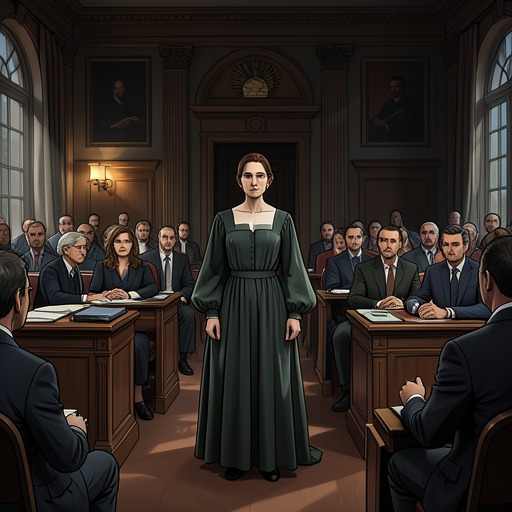
At the trial, Michael recognizes [Hanna Schmitz](entity:character-recall-character-hanna-schmitz-5994016fb8ff) among the defendants when she is called to stand. She confirms that she was born near Hermannstadt, worked at [Siemens](entity:organization-recall-organization-siemens-1608a2ad199e), and voluntarily joined the [SS](entity:organization-recall-organization-ss-4977af73ebea) in 1943; she gives brief answers about her service at Auschwitz and a satellite camp near Cracow.
Her lawyer challenges the grounds for holding her in custody, and Michael realizes he had wanted her kept away from his life regardless of the evidence. He attends the proceedings every day, unable to treat Hanna as merely a memory.
the first weeks of the trial
The Numb Spectator
Michael watches Hanna from behind, studying the rigid posture of her head, neck, and shoulders. Memories of her body and their intimacy surface without feeling, as though he were observing someone else’s past.
He recognizes a similar numbness spreading through the courtroom: judges, prosecutors, and students gradually absorb the accounts of atrocity into routine. The comparison unsettles him because the numbness touches victims, perpetrators, and observers without erasing the profound difference between suffering and inflicting it.
the second week of the trial
The Indictment Read
The indictment, phrased cautiously in legal language, takes a day and a half to read. Five women had served as guards at a satellite camp near Cracow after being transferred from Auschwitz, and they face accusations concerning prisoner selections and a fatal church fire during a forced march west.
The survivors are a mother and daughter who were trapped inside the church but lived. The daughter has written a book about the camp and march, and the mother is to be questioned in [Israel](entity:location-recall-location-e1a1566e26c9). The account establishes the crimes at the center of the proceedings.
during the early testimony at the trial
Hanna’s Admissions
Hanna’s insistence that the court record is wrong and her blunt admissions irritate the presiding judge. She acknowledges that the guards participated together in monthly selections, sending women back to Auschwitz when they could no longer work.
Asked whether she knew the women would be killed, Hanna says yes, but explains that new prisoners arrived and the old ones had to make room. When the judge asks what she would have done, she turns the question back to him, exposing the distance between legal generalities and the choices made inside the camp.
during cross-examination in the trial
The Readers Revealed
A defense lawyer tries to isolate Hanna’s responsibility, asking whether her admission that the guards knew of the killings applies only to her. He also accuses her of keeping favored young prisoners, then sending them away on transports once she was finished with them.
The survivor daughter suddenly remembers that these prisoners had read aloud to Hanna, who had protected them from labor for a time. The detail brings Hanna’s past into the courtroom in an unexpected way, and Hanna turns to Michael, whose presence she has known all along.
later in the trial testimony
The Church Fire Testimony
The defendants claim they could not unlock the church during the bombing and fire, offering accounts of shock, injury, and confusion. A surviving record suggests that guards remained behind to prevent escapes and left the prisoners locked inside as the church burned.
Another defendant points to Hanna as the author of the report that implicated them all. Hanna first resists the accusation, then admits she wrote it when the court discusses calling a handwriting expert. Her admission strengthens the case against her and gives the other defendants a way to shift blame onto her.
after the daughter’s testimony and before the verdict
The Meaning of the Fire
The daughter’s account describes how the women in the church heard the fire too late, panicked, and were trapped as the roof collapsed. She and her mother survived by fleeing to a narrow gallery, where they waited until they could leave at dawn.
The narrative leaves Michael with the question of whether the guards’ confusion can explain, though not excuse, their failure to open the doors. He cannot reconcile the difficulty of understanding the situation with the necessity of condemning the crime.
during a Sunday walk while the trial is underway
The Illiteracy Revelation
Walking familiar paths on Sundays, Michael gradually reaches a conclusion that explains many of Hanna’s choices: she cannot read or write. The realization clarifies why she had people read to her, why she left Michael to handle maps and notes on their trip, and why she avoided advancement at [Siemens](entity:organization-recall-organization-siemens-1608a2ad199e) and in the streetcar company.
It also explains why she admitted writing the camp report rather than risk a handwriting examination. Michael considers whether her illiteracy shaped her decisions at the trial and in the camp, but refuses to turn it into a complete explanation or an excuse for her crimes.
near the end of the trial
The Choice to Stay Silent
Michael realizes he could tell the judge that Hanna is illiterate, which might explain her disastrous defense and reduce her sentence. He also understands that doing so would expose her deepest shame without her consent and exchange her self-respect for a shorter prison term.
He asks his father for guidance in abstract terms. His father argues that dignity and freedom require speaking to the person concerned rather than acting behind her back, but Michael cannot bring himself to face Hanna and tell her what he knows. He ultimately does not reveal her illiteracy to the court.
during the summer hearing in Israel
The Trial’s Emotional Toll
While the court travels to [Israel](entity:location-recall-location-e1a1566e26c9) to hear the surviving mother, Michael remains behind and is troubled by imagined scenes of Hanna in the camp. The images alternate between her as a guard and the woman he loved, until the two versions merge and contaminate his memories.
He recognizes how little direct knowledge his generation has of camp life, and how its few photographs and testimonies have hardened into clichés. The effort to picture Hanna’s crimes intensifies his fear about his own desire and his inability to separate intimacy from moral judgment.
during the trial, after the court travels to Israel
The Visit to Struthof
Seeking direct reality to break through his inherited images, Michael hitchhikes to the nearby Struthof camp. A driver challenges his wish to understand how people can commit atrocities, arguing that indifference, not only hatred or obedience, can make murder possible.
When Michael asks whether the driver was the officer in a photograph of Jews being shot, the man throws him out of the car. Michael walks the remaining distance to the camp, carrying the encounter as a harsh lesson in the possibility of ordinary indifference.
during Michael’s first visit to Struthof
Failure to Imagine the Camp
At Struthof, Michael tries to imagine the crowded barracks, the prisoners at roll call, and the suffering described in accounts of the camps. The exercise fails, leaving him ashamed that he cannot make the past vivid through effort alone.
That evening, he sees a group of men mock an old man with a wooden leg, only to discover that the men and the old man are sharing a joke. The episode unsettles his confidence in his own moral perceptions, while the camp visit leaves him unable either to understand Hanna’s crime or to condemn it without feeling that he has betrayed her.
near the end of the trial
The Judge’s Office
Michael visits the presiding judge, intending to offer information but unable to say what he knows. They talk instead about the judge’s career, studies, and orderly professional life.
The conversation gives Michael a way to leave without intervening. On the train home, he feels the numbness of the trial settling over his thoughts again, allowing him to return to ordinary life while remaining aware that he has chosen not to help Hanna.
the end of June, at the trial’s conclusion
Life Imprisonment
The court sentences Hanna to life imprisonment, while the other defendants receive fixed prison terms. On the day of the verdict, Hanna arrives dressed in a black suit and white blouse that the spectators read as a uniform, intensifying their anger.
She listens standing upright and motionless, then sits during the reading of the reasons. When the proceedings end, she does not look toward Michael. Her exhausted, wounded expression leaves him with no reconciliation and no clear farewell.
the summer after Hanna’s sentencing
Numbness Breaks
Michael studies obsessively in the university library and avoids nearly all contact. During a Christmas ski trip, he fails to feel cold, welcomes feverish sensations, and eventually collapses with a high fever.
After leaving the hospital, the numbness that had protected him from the trial’s emotions disappears. Fear, accusation, guilt, and pain return with force, showing that his emotional detachment has postponed rather than resolved his reckoning.
during the student upheavals, years after the trial
The Second Generation’s Shame
Michael observes the student movement’s confrontation with the Nazi past from a distance. He recognizes that many of his generation experienced collective shame over the crimes and the postwar accommodation of former Nazis, even when they could not accuse their own parents.
For Michael, pointing at Hanna does not free him, because he loved and chose her. He questions the self-righteousness of students who dissociate themselves from their parents and wonders whether love itself can make the next generation complicit in the past.
while Michael is clerking as a young lawyer
Marriage to Gertrud
Michael marries [Gertrud](entity:character-recall-character-gertrud-7c0911ac7bac) after they meet at a ski lodge and study law together. They marry when Gertrud becomes pregnant, and their daughter [Julia](entity:character-recall-character-julia-dd9a6077f139) is born.
Michael does not tell Gertrud about Hanna. Their life together is responsible and orderly, but he keeps comparing their intimacy with the past and feels that something is wrong. The marriage cannot bear the distance he carries into it, and the couple eventually divorces when Julia is five.
after the divorce, during Michael’s legal career
A Life of Retreat
Michael tries to enter later relationships more honestly, but the women either respond with silence, reinterpret his story, or forget what he tells them. He concludes that speech alone cannot establish truth and stops explaining himself.
Unable to imagine himself as prosecutor, defense lawyer, judge, or administrator, he accepts a legal-history research position and later moves into a research institution. The work gives him a refuge, though he recognizes that studying law in the Third Reich also connects the past to the present.
after Michael’s second state examination
The Professor’s Funeral
Michael learns that the professor who led the camp-trial seminar has died. Although he initially resists attending the funeral, memories of the trial draw him to the cemetery after his examination.
A former seminar member recognizes him and asks whether his daily attendance at the trial was really about the proceedings or about Hanna. Michael cannot answer without confessing or evading. He runs alongside a departing streetcar, and it stops for him, allowing him to board and escape the question.
after Michael separates from Gertrud
The Odyssey Reopens
Unable to sleep and surrounded by memories of his marriage and daughter, Michael returns to the Odyssey, a book he once read aloud to Hanna. He begins recording himself reading it for her, then continues through other works and sends the tapes to the prison where she is held.
The recordings become his means of speaking to Hanna while avoiding personal conversation. He reads what he wants to read, says nothing about his own life, and waits until the reading is complete before sending the first package.
from the eighth to the eighteenth year of Hanna’s imprisonment
Years of Recorded Contact
Michael continues sending recordings for roughly ten years, including novels, poetry, and eventually his own writing. He never adds personal messages or asks Hanna direct questions; the texts become the entire form of their contact.
The practice gives Michael a controlled closeness that keeps Hanna both present and at a distance. His recordings are not simply a gift for her: they also allow him to sustain a relationship without entering the consequences of direct conversation.
the fourth year of the cassette exchange
Hanna’s First Note
A short handwritten note arrives from Hanna, thanking Michael for a story and saying it was especially nice. The awkward but forceful writing shows the effort required to form each letter.
Michael understands that Hanna has learned to read and write. He is proud of her achievement and moved by the struggle it represents, while wondering whether a change that comes so late can still be called liberation or whether some opportunities have already been lost.
after Hanna’s first note and through the remaining years in prison
Hanna’s Literary Notes
Hanna begins sending occasional notes about books, poems, prison, and the changing seasons. Her brief judgments are often sharp and original, and her handwriting gradually becomes lighter and more assured.
Michael keeps every note but never writes back. He continues recording readings, partly because Hanna can now follow books herself and partly because reading aloud remains the only way he knows how to speak to her.
the year before Hanna’s planned release
The Warden’s Request
The prison warden writes to Michael that Hanna will likely receive clemency and be released after eighteen years. She asks him to help arrange a small apartment, work, and support during Hanna’s difficult return to ordinary life.
Michael secures a modest apartment and a possible job with a Greek tailor, and researches social and educational programs. Yet he delays visiting Hanna, fearing that the safe distance created by notes and tapes will collapse if they meet face to face.
the Sunday before Hanna’s release
The Prison Visit
Michael visits Hanna for the first time in prison and finds her aged, heavy, and gray-haired, holding a book without reading it. She recognizes him with joy that fades into hurt as she sees his face, then tells him he has grown up.
Michael describes the apartment, job, and programs he has arranged. Hanna asks whether he will keep reading to her, and he cannot promise that he will. She says the dead came to her in prison and could call her to account because they understood what she had done; Michael realizes that keeping her in a private niche has been another way of avoiding her.
the week before Hanna is due to leave prison
A Quiet Release Planned
Michael prepares Hanna’s apartment with furniture, groceries, books, pictures, and a small garden, pressing through the work with unnatural haste. The preparations keep him from considering what their reunion will mean.
The day before the release, he calls Hanna and asks whether she wants to go home or visit the woods or river. She teases him for being such a planner. Michael is annoyed, but notices that her voice still sounds young despite her aged appearance.
the morning of her scheduled release
Hanna’s Suicide
Hanna is found dead after hanging herself at daybreak, before Michael can collect her from prison. The warden asks Michael whether the previous visit or their telephone call gave him any warning; he says he had none.
The warden shows him Hanna’s cell, where Michael finds his cassette machine and the tapes he sent, along with books about the camps and the perpetrators. Hanna had borrowed the books connected to his recordings and learned to read by following them word by word.
immediately after Hanna’s death
The Cell’s Evidence
The warden explains that Hanna once held a sit-down strike to restore library funding, and later sought books about women in the camps. Her cell is decorated with poems, nature images, recipes, and a photograph of Michael receiving a school prize, taken long after she left [Heidelberg](entity:location-recall-location-heidelberg-fef686c04437).
[Hanna’s final letter](entity:object-recall-object-hanna-s-final-letter-7556fdbefc40) leaves money in a lavender tea tin and in her bank account, instructing that it be sent to the surviving daughter from the church fire, who should decide what to do with it. She sends Michael only a greeting, not a personal message. The warden asks why he never wrote to Hanna, and he cannot answer.
the morning after Hanna’s death
The Prison Years Recounted
The warden describes Hanna’s years in prison as a life of discipline and withdrawal. She was respected by the other women and often sought out for advice, but in later years she stopped caring for her appearance and retreated into a more solitary existence.
Michael sees Hanna’s body in the infirmary. As he looks, the young woman he loved seems to appear within the old face, and he wonders why he failed to see that continuity during their last meeting. He leaves without being able to cry openly or make sense of her final decision.
the autumn after Hanna’s death
The Daughter in New York
Michael travels from Boston to New York to bring the surviving daughter Hanna’s money. During the train journey, he imagines a life in which Hanna is alive and they share a home, then wakes to recognize that his longing is not really directed toward the woman herself.
He meets the daughter, who asks why Hanna chose her and whether the money is meant to grant absolution. Michael explains that Hanna’s imprisonment had become a way of giving meaning to her punishment, a meaning she hoped the daughter would recognize without forgiving her.
during Michael’s meeting with the daughter
The Tea Tin Returned
The daughter recognizes the lavender tea tin as resembling one she treasured as a child, containing keepsakes from her earlier life. She explains that the tin itself would have been valuable in the camp, regardless of its contents.
She refuses to use the money for [Holocaust](entity:time-recall-time-holocaust-0f47e1ae542d)-related work if that would imply absolution. Instead, she asks Michael to find a Jewish organization supporting people who want to learn to read and write, and to donate the money in Hanna’s name. She keeps the tin as a personal object rather than a token of reconciliation.
soon after Michael returns from New York
The Donation and Grave
Michael donates Hanna’s money in her name to the [Jewish League Against Illiteracy](entity:organization-recall-organization-jewish-league-ag-84c287f34681). The organization sends a short acknowledgment addressed to Hanna, and Michael carries it to her grave.
It is the first and only time he visits the grave. The act connects Hanna’s lifelong shame about illiteracy to a cause that may help others, without resolving the question of whether such a gesture can mean forgiveness or repair.
ten years after Hanna’s death, near the book’s end
Writing the Story
[Michael Berg](entity:character-recall-character-michael-berg-6fc8d3e96866) recalled that he had written repeatedly in his mind the story between himself and Hanna Schmittz. As memories brought new images and thought patterns, each version changed. The written version was the one that longed to be written down, although writing did not free him from the past